England's flood warning service has three levels, and each one asks something different of you. Knowing which is which, and how much time each usually gives you, is the difference between moving the car and photographs in good time and wading back for them.
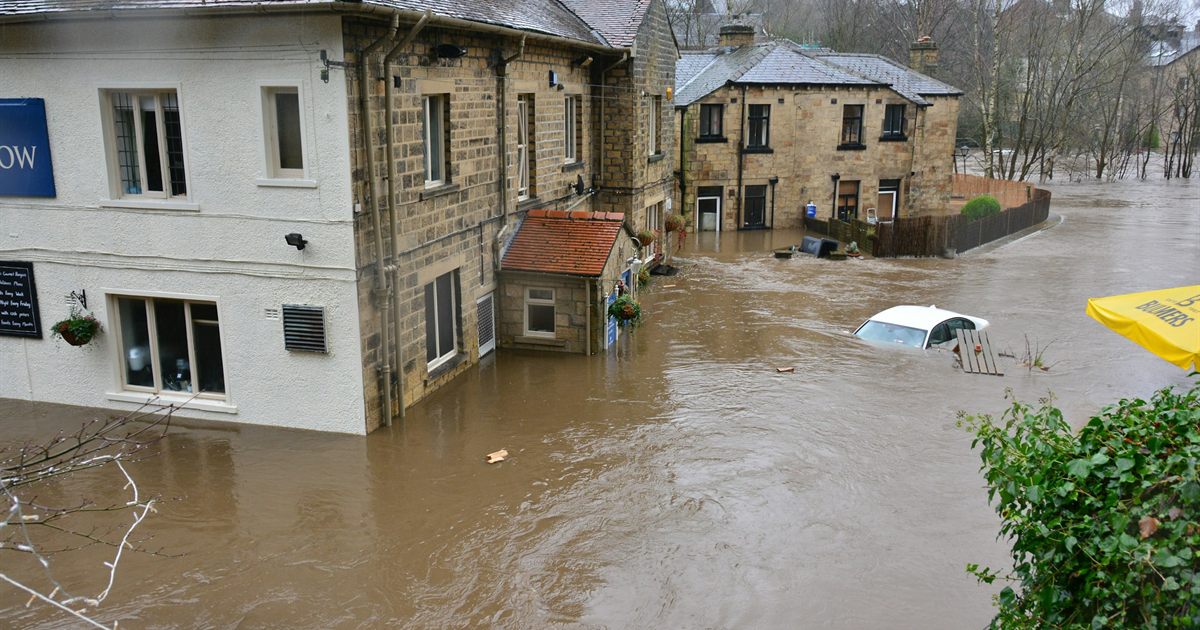
The River Aire in flood at Bingley, West Yorkshire, on Boxing Day 2015. Photo: Chris Gallagher / Unsplash (illustrative only)
Published 5 November 2026 · A RISE guide · 5–7 minute read
The Environment Agency says 6.3 million houses in England are already at risk of flooding, a figure it expects to reach 8 million by the middle of the century. In July 2026 it said 1.54 million people had signed up to its free flood warning service. If you are one of them, this is what each message means. If you are not, our next guide covers how to sign up.
| Level | What it means | Usual notice |
|---|---|---|
| Flood alert | Flooding is possible. Prepare now. | Usually 2 to 12 hours before flooding |
| Flood warning | Flooding is expected. Act now. | Usually 30 minutes to 2 hours before flooding |
| Severe flood warning | Danger to life and significant disruption to communities. You must act now. | Issued when lives are at risk |
The timings are the Environment Agency's own, and the word it uses is “usually”. Treat them as typical, not guaranteed.
An alert is your time to get ready while it is still easy. The Agency's advice is to be ready to follow your flood plan, keep insurance documents and medication to hand, and stay out of floodwater, whether walking, cycling or driving. Farmers are told to move livestock and equipment away from areas likely to flood.
A warning means flooding is expected. The Agency's list is short and practical: protect yourself and the people you live with, move family, pets and valuables to safety, go upstairs or to higher ground, turn off gas, electricity and water if it is safe to do so, put your flood protection in place, and follow the emergency services' advice.
A severe warning is rare and means danger to life. Stay somewhere safe, be ready to leave, and do what the emergency services tell you. If you are in immediate danger, call 999. In a flash flood, the advice is to get to higher ground if it is safe to do so.
The government is plain about this: you cannot get flood warnings for surface water flooding, sometimes called flash flooding. The service sends messages about flooding from rivers, the sea or groundwater, depending on where you live. Many of the floods we see in Buckinghamshire, Oxfordshire, Northamptonshire and Bedfordshire start with surface water and overwhelmed drains, so a quiet phone is not a promise that you are safe.
The Met Office's yellow, amber and red warnings are a separate system about the weather itself. A red warning means “dangerous weather is expected”. Heavy rain warnings are often the only early sign of surface water flooding, so it is worth watching both.
Once everyone is safe, the first days set the cost of everything that follows. Our guide to the first 72 hours after a flood covers what to photograph, who to call first, and what not to throw away before the insurer has seen it.
Sources: GOV.UK, Flood alerts and warnings: what they are and what to do. GOV.UK, Sign up for flood warnings. Environment Agency, How climate change is impacting the way flooding is managed (20 Jul 2026). Met Office, UK weather warnings.
Live data from the Environment Agency, refreshed every 15 minutes.
No obligation. No jargon. By the end of the call you will have a clear view of your options — whether you engage RISE or not.
Call any time No callback RISE directly
Help us focus future content
RISE is researching gaps in publicly available flood recovery information. If you have 90 seconds, your responses help us understand what homeowners actually struggle to find clear answers on — and shape what we write next.
Take the 90-second survey →