
This year the Environment Agency put 28 of its largest pumps to work across Somerset. They kept water out of around 180 homes and businesses. Around 80 to 90 properties flooded anyway. Here is what emergency pumping can and cannot do for a household, who decides where the pumps go, and what to do if you are on the wrong side of that decision.
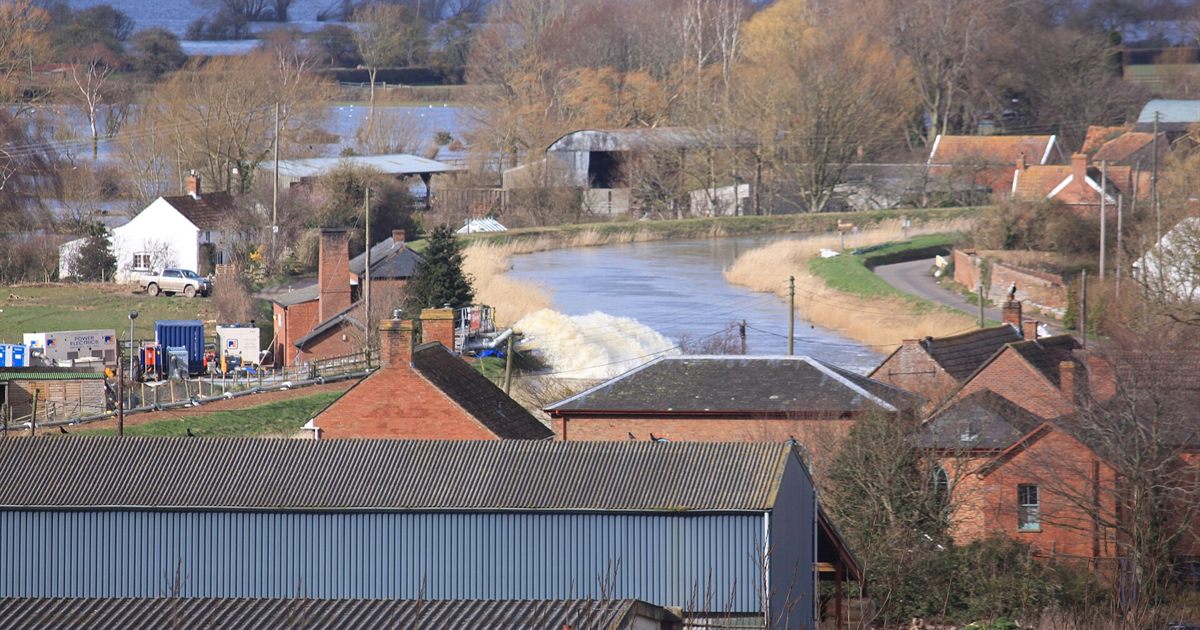
Extra pumps at Northmoor pumping station on the Somerset Levels during the 2014 floods. The same station was pumped again in 2026. Photo: Rodw / Wikimedia Commons, CC BY-SA 3.0, cropped.
Published 3 November 2026 · A RISE update · 6–8 minute read
Somerset had its second wettest January and February on record in 2026, with more than double the average rainfall. During Storm Chandra, around 1.2 million cubic metres of water an hour moved through the Parrett and Tone catchments. At the peak, about 30 square miles of farmland on the Levels and Moors was under water, and Somerset Council declared a major incident.
Somerset is outside the four counties RISE works in. We are writing about it because it is the clearest recent example of something every flood-prone household should understand: what emergency pumping is for, and what it is not.
| Somerset, winter 2026 | Figure |
|---|---|
| Locations given extra pumps by the Environment Agency | 19 |
| Ultra-high volume pumps among them | 28 |
| Homes and businesses kept dry by pumping | Around 180 |
| Properties protected by flood defences | 2,860 |
| Properties flooded across Somerset | 80 to 90 (Environment Agency); 91 (Somerset Council) |
| Of which on the Levels and Moors | Around 20 (Environment Agency); 23 (Somerset Council) |
The two sets of flood figures come from different points in the recovery. The council's were published when the major incident was stood down on 18 February. The Environment Agency's summary was last updated in September. Either way, pumping and defences protected far more homes than flooded. That is no comfort to the homes that did.
On the Levels, the land behind the river banks is lower than the rivers when they are full. Pumping stations lift water off the moors and push it into the rivers. In January, the Environment Agency added pumps at Currymoor, Saltmoor and Northmoor, starting the work in anticipation of “trigger points being met”. By 28 January all six extra pumps at Northmoor were running.
That tells you three things about emergency pumping:
It depends on whose water it is. Somerset Council's own guide to the responsible bodies sets it out:
As we set out in our guide to who is responsible when your property floods, these bodies have powers to act, not duties to protect a particular property. Emergency pumping is a decision those bodies make on the water levels in front of them, not a service a household is entitled to.
On 9 June 2026 the government gave Somerset Council £50 million for a two-year programme of flood resilience work, run with the Environment Agency, Somerset Rivers Authority, the internal drainage board and Natural England. The council's emerging priorities include reviewing the recent floods and support for property-level flood protection. The Environment Agency says it has since inspected more than 2,300 assets across Wessex, installed a bypass culvert at Northmoor pumping station and fitted new pumps at Midelney as part of a £9 million upgrade.
For a household, the lesson travels well beyond Somerset. Pumps and defences protect places. Protecting your own property, and holding the authorities to what the law asks of them when it floods, is a separate job.
If your home has flooded and you want to know what your own lead local flood authority should be doing about it, the RISE Section 19 Case Assessment is £250, delivered to your inbox.
Sources: Environment Agency, Somerset flooding 2026 (updated 29 Sep 2026). Somerset Rivers Authority, Environment Agency briefings of 26 January and 28 January 2026. Somerset Council, flooding incident moves into recovery phase (18 Feb 2026), responsible authorities and £50m flood resilience fund (9 Jun 2026). Defra, Floods Minister visits Somerset (10 Feb 2026). Flood and Water Management Act 2010, section 19. House of Commons Library, Financial support following a flood (England).
Live data from the Environment Agency, refreshed every 15 minutes.
No obligation. No jargon. By the end of the call you will have a clear view of your options — whether you engage RISE or not.
Call any time No callback RISE directly
Help us focus future content
RISE is researching gaps in publicly available flood recovery information. If you have 90 seconds, your responses help us understand what homeowners actually struggle to find clear answers on — and shape what we write next.
Take the 90-second survey →