
This isn't about points on a licence or a voided insurance policy — that framing puts the driver at the centre of a story that was never about them. This is about what actually happens to a flooded street, and the people and emergency crews still fighting the water on it, when someone decides a closure doesn't apply to them.
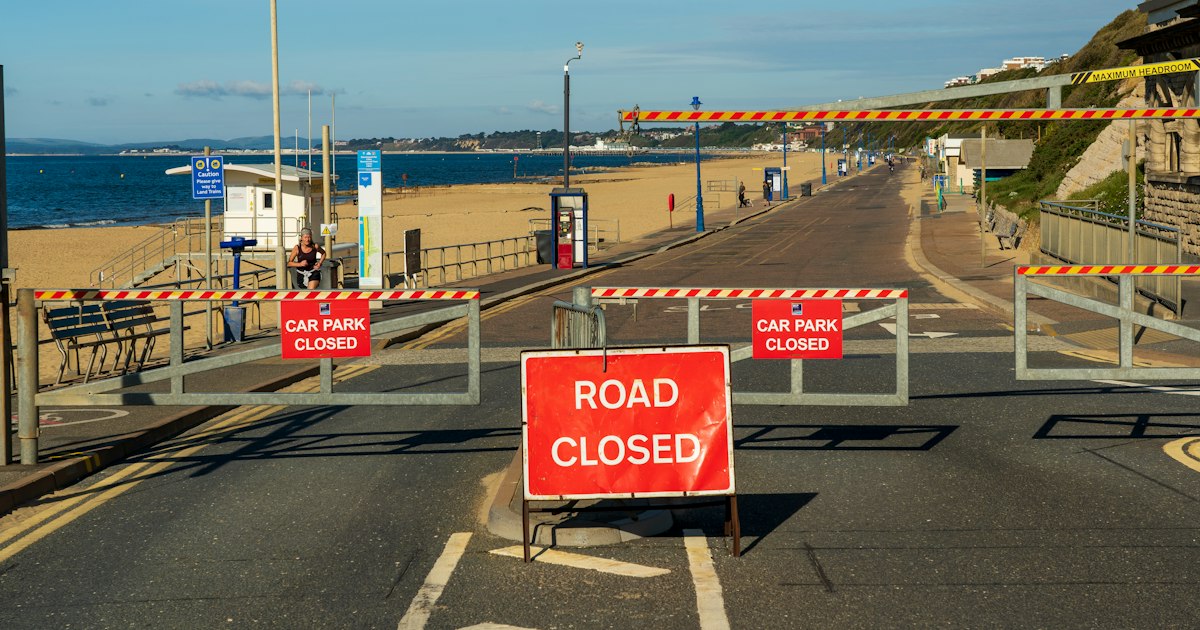
Photo: Nick Fewings / Unsplash (illustrative)
Published 28 September 2026 · A RISE guide · 6–8 minute read · Updated 1 October 2026
A road closed for flooding is not a suggestion, and it is not council bureaucracy getting in the way of someone's shortcut home. It is closed because the water is deep, moving or likely to rise, in a way that is dangerous or damaging — to the driver, yes, but far more often to the people and properties still standing in it.
According to The Flood Hub, a vehicle moving through floodwater generates a bow wave — a wall of displaced water that builds up in front of the vehicle and grows larger the faster it travels. That wave doesn't stay contained to the road. It can crash directly into nearby buildings, flood entrances that were otherwise holding, and overwhelm property flood resilience measures that a homeowner may have spent real money installing specifically to keep water out. Multiple vehicles repeating the same journey compound the damage further, in the same way repeated waves erode a coastline.
During an active flood, crews are sometimes working in the road itself, managing the immediate emergency, and physically protecting a street's worth of homes. They are not bystanders you drive past — they are doing time-critical work in the exact space a bow wave travels through. A vehicle pushing through a closure they've established isn't just breaking a rule; it can directly undo the work in progress and put the people doing that work at physical risk.
A flooded home that was managing to keep water out is not the same as one that gets an additional surge forced through its door by a passing vehicle. The difference between those two situations can be the difference between a clean-up measured in days and a recovery measured in months — more contents lost, more structural drying needed, a longer stretch in temporary accommodation, more strain on a family already living through one of the hardest periods of their lives. As we've covered in our piece on the real cost of flood displacement, that extension isn't just financial. It's more time away from home, more disruption to children's routines, more strain on relationships already under pressure — all added by a decision that had nothing to do with the flood itself and everything to do with one person's impatience.
If a road closure was ignored near your property during a flood and it contributed to damage or delayed the emergency response protecting your home, that's a relevant, documented fact worth keeping on file — it belongs alongside everything else in your record if your case ever goes to a Section 19 investigation or an insurance dispute. If you're not sure how to build that record properly, the RISE Section 19 Case Assessment can help you understand what matters and what doesn't.
Sources: The Flood Hub, "Bow Waves and Flooding: How Driving Through Floodwater Can Flood Properties" (thefloodhub.co.uk, 18 September 2024).
Live data from the Environment Agency, refreshed every 15 minutes.
No obligation. No jargon. By the end of the call you will have a clear view of your options — whether you engage RISE or not.
Call any time No callback RISE directly
Help us focus future content
RISE is researching gaps in publicly available flood recovery information. If you have 90 seconds, your responses help us understand what homeowners actually struggle to find clear answers on — and shape what we write next.
Take the 90-second survey →