
The Property Flood Resilience Repair Grant can put up to £5,000 toward making a flooded home more resilient. It is also not a standing scheme you can apply to on any ordinary day — it switches on only after specific national conditions are met. Here is exactly how it works, sourced from Parliament's own research service.
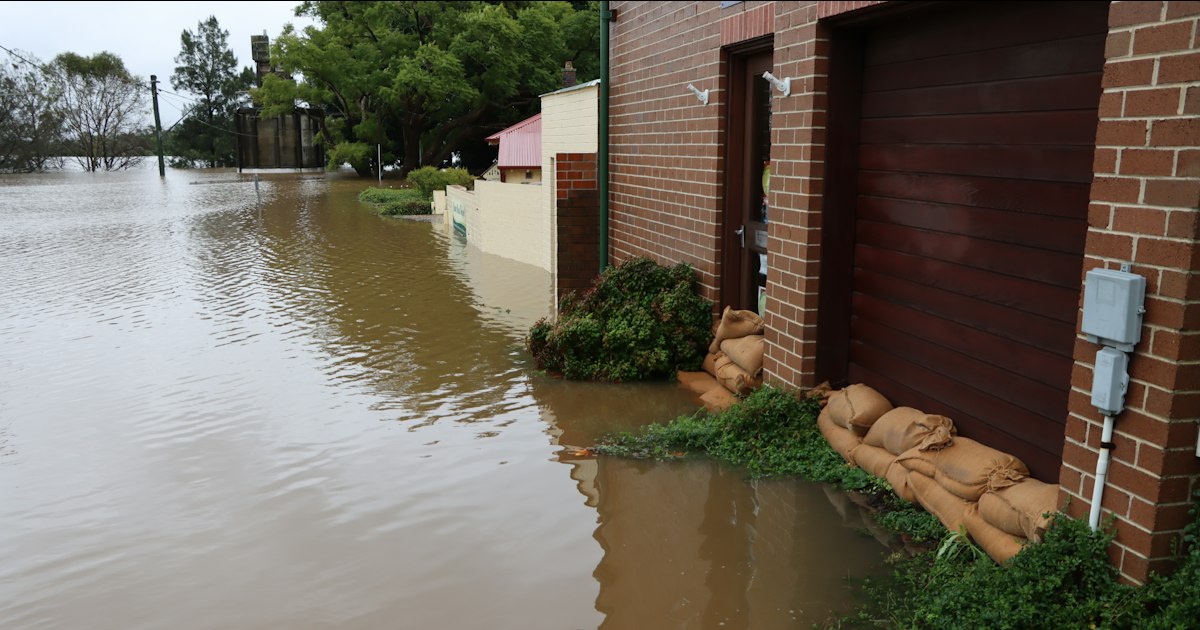
Photo: Wes Warren / Unsplash (illustrative)
Published 28 September 2026 · A RISE guide · 6–8 minute read
According to the House of Commons Library's own briefing on financial support following a flood in England, the Property Flood Resilience (PFR) Repair Grant is administered by lead local authorities and can provide up to £5,000 per household to help make a flooded property more resilient — practical measures like moving vulnerable features such as plug sockets above likely flood-water height, fitting resilient flooring, or installing air brick covers and non-return valves.
The detail that matters most, and the one most homeowners never check until it's too late to matter: this is not a permanent, always-open scheme. It was originally a trial programme, then reopened by government as a specific response to Storm Henk in January 2024. It operates as an add-on that activates following severe weather events that affect multiple local authorities and impact more than 25 properties. In other words, whether the grant exists at all for your flood depends on the scale and official classification of the event — not simply on the fact that your home flooded.
The PFR Repair Grant is one part of a wider package Parliament's briefing describes as the Flood Recovery Framework, which local authorities can also draw on after a qualifying event:
None of these are things a council proactively hands out on request the moment your street floods. Parliament's briefing is clear that the practical starting point is to contact your lead local flood authority — in most areas, your county or unitary council — directly, and ask specifically whether the current flood event has triggered the Flood Recovery Framework and the PFR Repair Grant. If it hasn't yet been formally activated for your area, that is worth asking about too, since activation can sometimes lag behind the flooding itself while central government and the local authority confirm the event meets the threshold.
If you're weighing up a resilience grant against a longer-term dispute with your council or water company about why your property flooded in the first place, that's a different and often more valuable conversation — the RISE Section 19 Case Assessment looks specifically at your Lead Local Flood Authority's legal obligations under the Flood and Water Management Act 2010, separate from any grant scheme.
Sources: House of Commons Library, "Financial support following a flood (England)" (commonslibrary.parliament.uk, 2026).
Live data from the Environment Agency, refreshed every 15 minutes.
No obligation. No jargon. By the end of the call you will have a clear view of your options — whether you engage RISE or not.
Call any time No callback RISE directly
Help us focus future content
RISE is researching gaps in publicly available flood recovery information. If you have 90 seconds, your responses help us understand what homeowners actually struggle to find clear answers on — and shape what we write next.
Take the 90-second survey →