
Flood Re's own data shows about a third of claims after Storms Babet, Ciaran and Henk included Build Back Better — up to £10,000 toward flood resilience measures after a claim — with use ranging from 4% to 56% depending on the insurer. That's not because homeowners don't want a more resilient home. It's because the scheme is opt-in, insurer-dependent, and easy to miss if nobody tells you it exists.
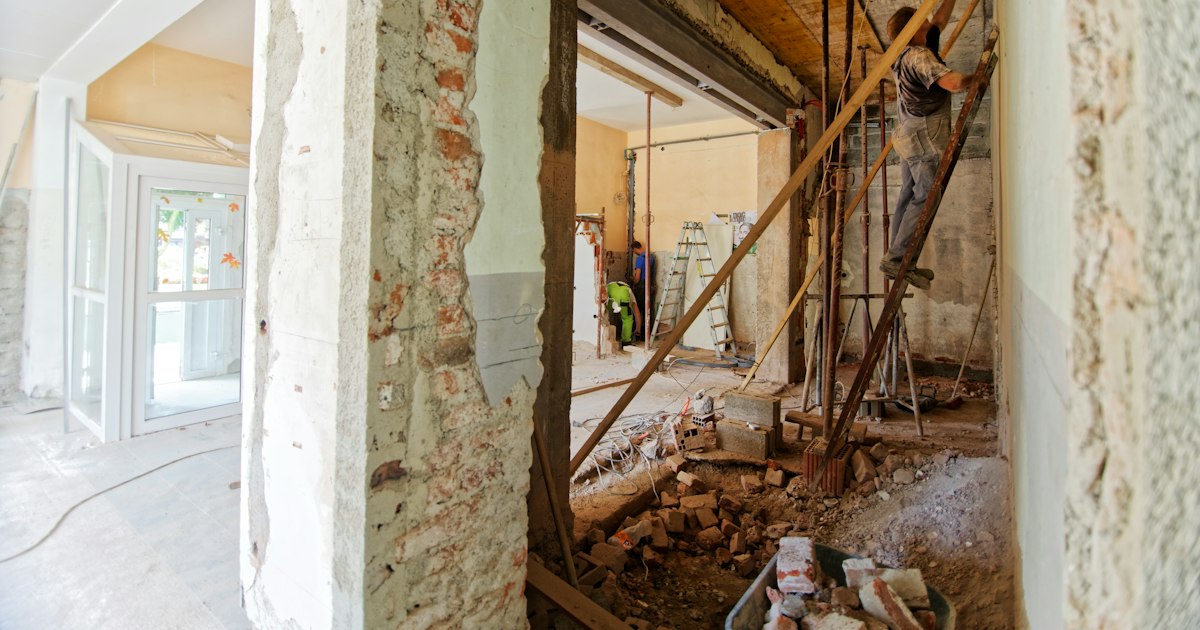
Photo: Milivoj Kuhar / Unsplash (illustrative)
Published 22 September 2026 · A RISE update · 6–8 minute read
We covered Flood Re's full ten-year reform package — the new Flood Performance Certificate, the premium changes, the roadmap timeline — in a separate, detailed article. This one is narrower and, for anyone who has already been flooded once, arguably more urgent: a scheme that already exists, is already funded, and that most eligible homeowners simply never use.
Build Back Better (BBB) is a Flood Re initiative that reimburses up to £10,000 on top of standard claim repairs, specifically for property flood resilience measures fitted while a home is already being repaired after a flood. According to Flood Re's own published guidance, eligible measures include drainage and sump pumps, waterproof membranes and resilient flooring, flood doors and barriers, air brick covers, non-return valves, raised utilities, and sealing vulnerable entry points — the practical measures that make the next flood cost less and recede faster.
The logic is straightforward: repairing a flooded kitchen back to exactly what it was before does nothing to stop the next flood causing the same damage again. Spending a little more at repair stage, while the walls are already open and the floor already up, can make the difference between a two-day clean-up and a two-month one next time.
This is the part that matters most, and it's stated plainly on Flood Re's own site: BBB is not automatically included in every Flood Re-backed policy. Flood Re's guidance is direct on this point — "if you want your home insurance policy to include BBB, speak to your broker or insurer before committing to purchase your policy, as each insurance provider's offering may differ." Coverage varies from insurer to insurer, and Flood Re maintains its own list of which providers currently offer it and which have only committed to offering it in future.
Then, at claim stage, the process depends on the insurer actively raising it: Flood Re describes the insurer working with the customer "to assess" which resilience measures would benefit the property, with the homeowner then choosing whether to accept them. In practice, that means BBB is easiest to access for homeowners who already know the phrase and ask for it directly — not something guaranteed to be offered as a matter of course in the middle of an already stressful claim.
None of this requires a solicitor or a claims specialist to access — it requires knowing the scheme exists and asking the right question at the right moment. That's precisely why so much of it goes unclaimed: it's a well-designed benefit sitting behind an information gap, not behind a genuinely difficult process.
If you're further down the road — disputing what your insurer has or hasn't offered, or unsure whether your council has fulfilled its own obligations following a flood — the RISE Section 19 Case Assessment looks at the fuller picture of what you may be owed. And if you'd like a second opinion on where you stand: 07391 151719.
Sources: Flood Re, "Build Back Better" and "How does it work in practice?" (floodre.co.uk); Flood Re's own reporting on Build Back Better uptake, cited in RISE's companion article on the 2026 Flood Re reform package.
Live data from the Environment Agency, refreshed every 15 minutes.
No obligation. No jargon. By the end of the call you will have a clear view of your options — whether you engage RISE or not.
Call any time No callback RISE directly
Help us focus future content
RISE is researching gaps in publicly available flood recovery information. If you have 90 seconds, your responses help us understand what homeowners actually struggle to find clear answers on — and shape what we write next.
Take the 90-second survey →